Saturday, January 26, 2013

A History of the British Cavalry; Volume 8, The Western Front


A History of the British Cavalry 1816-1919 Volume 8: The Western Front, 1915-1919 by The Marquess of Anglesey, FSA.
Lord Anglesey, a very prominent historian, has had many interests besides the cavalry. When he set out to write Volume 8 of his History, he was of the common opinion that cavalry had seen its best days and long outlived its usefulness by the onset of trench warfare.
In the course of his research he came to change his opinion. In this regard his conclusions are similar to those of David Kenyon (Horsemen in No Man’s Land; see my blog post of 12 January 2013).
In the preface Anglesey writes as follows: “More important than any of this (referring to relatively light cavalry casualty figures early in the Great War) was the truly vital part played by the mounted troops of the BEF at the worst moments of crisis. Acting as a ‘fire brigade’ they time and again stopped up gaps as only the sole speedily movable element of the force could do. It is not too much to claim that on a number of occasions catastrophes of major dimensions were averted by such action.”
It is also sadly true, as posited by David Kenyon, that by the end of the war the numbers of cavalry killed and wounded were right up there with the infantry.

Saturday, January 12, 2013

"Horsemen in No Man's Land": A Review

David Kenyon at work
photo from
http://www.battlefieldpartnerships.co.uk/page13.html

My post of 3 January 2013 features a cover shot of "Horsemen in No Man's Land", subtitled "British Cavalry and Trench Warfare 1914-1918". It appropriately features photos of Indian Army and British troopers.
The author, Dr. David Kenyon, is a British military historian and archaeologist who was featured in "Man & Horse", one of Yap Productions' videos featured numerous times on history television. As I recall Kenyon's part of the program, he was explaining that a man on horseback is in fact difficult to hit with a machine gun; no doubt even more difficult if the man and horse are galloping at the gunner with hard steel extended. Personally, I would not like to be in the boots of either of the participants.
"Horsemen in No Man's Land", ISBN 978-1-84884-364-6, was published in 2011 in the UK by Pen & Sword Military. In it, the author posits that contrary to popular belief the cavalry was no less effective than any other arm of the military, on those occasions when it was properly led and battlefield communication problems did not arise.
A second conclusion is that casualty rates in the cavalry were pretty much the same as in other branches, although higher among the officer corps. He also reminds us that much of the time the cavalry were in the trenches along with their infantry brothers, and not going for leisurely gallops across the rolling hills of Picardy.
Interesting quotes are used. One example, from a cavalryman, argues that if infantry officers used the horses available to them, they would have lived longer! Presumably because they'd be moving faster, even though presenting a bigger target. I am not sure many infantry subalterns would have accepted the advice.
Dr. Kenyon has presented a factual, well documented reassessment of the use of cavalry in the Great War. Highly recommended.

Thursday, January 3, 2013

"Horsemen in No Man's Land"

Here is the cover image of "Horsemen in No Man's Land", by David Kenyon.


Subtitled "British Cavalry & Trench Warfare 1914-1918", Kenyon's book is a must-read for people even casually interested in the British cavalry--which, in the Great War, included the Canadian Cavalry Brigade.
Indeed, the Canadians in the Canadian Cavalry Brigade were a small but crucial element in the Allies' eventual triumph in 1918.

Thursday, December 27, 2012

Battle of Moreuil Wood Revisited


I was very interested to be contacted by lawyer Dallas Ewen of Winnipeg last spring. Dallas is keen on modelling soldiers, and in particular had in mind a display to show the Battle of Moreuil Wood. He had come across my blog, and wondered if I could direct him to the location of the battlefield. Dallas was in France at the time. Not only could I direct him to the site, but I was able to give him contact information for M. Jean-Paul Brunel, unofficial representative of the Canadian Cavalry Brigade in Moreuil. 
 My wife and I had been entertained royally by J-P in 2008, when we visited Moreuil on March 30th for the 90th anniversary of the Battle. Here are a couple of photos taken in 2008 that show Jean-Paul at the time.

Dallas Ewen was able to get in touch with Jean-Paul; here is one of his photos, taken in 2012.

 I was very happy to hear that J-P was as enthusiastic about the Canadian Cavalry Brigade as ever. The background scenery may have changed somewhat, but from what Dallas tells me, Jean-Paul is as full of energy as we found him in 2008.
If you click here you will see one of a series of articles I wrote about Jean-Paul Brunel.

Wednesday, December 12, 2012

The Author in Jail--but was his father there first?


Robert Mackay in jail, all for research of course

 An early scene in “Soldier of the Horse” involves the protagonist, Tom Macrae, getting thrown into the local gaol. In reality, my father (alter ego of Macrae) never told me he actually saw the inside of a cell, and it probably didn’t happen. Even so, I got a big kick out of finding a salvaged jail cell in a Winnipeg museum.
  Did Tom Mackay ever scratch his name onto the wall of the steel-clad cell? Not that I could see!

Monday, December 3, 2012

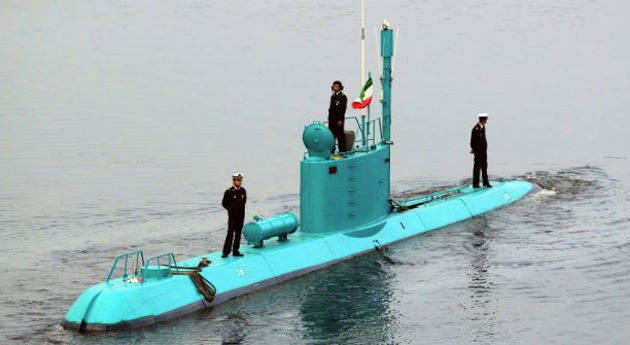
Iran's Psychedelic Submarine

http://l.yimg.com/bt/api/res/1.2/DxJTeBya3a5QdF6AytSdBA--/YXBwaWQ9eW5ld3M7cT04NQ--/http://media.zenfs.com/en/blogs/thesideshow/BlueSub1.jpgThe Iranian navy has launched a new submarine, a Sina 7. The boat has attracted attention because of its startling colour—a very light blue, even turquoise. Presumably it is a mistake, and someone in the Iranian dockyard used the wrong paint. The boat would have to go pretty deep to avoid visual detection from the air.
Even a submarine with a startling paint job can be a problem, though, given Iran’s bellicose regime and its position on the north side of the Strait of Hormuz. It has been estimated that 20% of the world’s oil supply passes through the Strait, with an average of fourteen tankers traversing it daily.
Any submarine can pose a serious risk to a surface ship. Even a turquoise submarine will be attracting observation by the west’s navies.

Thursday, November 29, 2012

Winnipeg--walking the ground for "Soldier of the Horse"


Robert Mackay in jail; photo by Bill Mackay
An early scene in “Soldier of the Horse” involves the protagonist, Tom Macrae, getting thrown into the local gaol. In reality, my father (alter ego of Macrae) never told me he actually saw the inside of a cell, and it probably didn’t happen. Even so, I got a big kick out of finding a salvaged jail cell in a Winnipeg museum.
Did Tom Mackay ever scratch his name onto the wall of the steel-clad cell? Not that I could see!