Showing posts with label cavalry. Show all posts
Friday, May 29, 2015
"Soldier of the Horse" and Bloody Jack
Bloody Jack Krafchenko was executed for murder in 1914, after a bizarre series of events that included an escape from the Winnipeg jail using a pistol smuggled in to him by--perhaps--his lawyer.
One version of the story was included in "Soldier of the Horse", when Tom is accused of having a part in the plot. The real-life Tom isn't around to answer any more questions, but the gun is. It's pictured here in the Winnipeg Police Museum, along with museum personnel Jack Templeman and Bruce Honey.
Friday, May 8, 2015
IPPY Strikes Again
Here's what Soldier of the Horse's Independent Publishers (IPPY) gold medal looked like three years ago. Soldier won top prize in the category Military/Wartime Fiction.
Now my second novel, Terror on the Alert, has almost duplicated the feat, receiving a silver medal in the same category.
Very exciting and rewarding.
There is a lot of encouragement out there for writers. Not to mention a heap of support from publishers, writing organizations such as Canadian Authors Association, BC Federation of Writers, and many others.
And like others writers, a big thanks for all the support from family and friends.
Now my second novel, Terror on the Alert, has almost duplicated the feat, receiving a silver medal in the same category.
Very exciting and rewarding.
There is a lot of encouragement out there for writers. Not to mention a heap of support from publishers, writing organizations such as Canadian Authors Association, BC Federation of Writers, and many others.
And like others writers, a big thanks for all the support from family and friends.
Saturday, April 18, 2015
From Snorting Steeds to Roaring Mechanical Monsters
Canada's cavalry regiments, which had distinguished themselves in World War I, had a major transition with the advent of the Second World War. At left is Lieutenant Austin Stanton of the 19th Alberta Dragoons, ca. 1937. (photo courtesy Jim Stanton.)
Only five years later,Lieutenant Stanton had made the big jump to the armoured corps, serving as Battle Adjutant of the Calgary Tanks when they landed at Dieppe in 1942.
The photo at right is of one of Lord Strathcona's Horse (RC)'s Leopard II's, the German-built behemoths that saw service in Afghanistan. The Strathconas remained mounted until 1940, when they too made what had to be a wrenching conversion to turn in their horses and eventually become tankers.
Only five years later,Lieutenant Stanton had made the big jump to the armoured corps, serving as Battle Adjutant of the Calgary Tanks when they landed at Dieppe in 1942.
The photo at right is of one of Lord Strathcona's Horse (RC)'s Leopard II's, the German-built behemoths that saw service in Afghanistan. The Strathconas remained mounted until 1940, when they too made what had to be a wrenching conversion to turn in their horses and eventually become tankers.
Thursday, February 5, 2015
A Great War Trooper's Last Ride
A short time ago I posted a photo of my father, Tom Mackay, when he was training in Winnipeg before joining his regiment, Lord Strathcona's Horse (RC), in France. (See 22 January 2015 )
Tom's legs were badly shot up when he rode with Gordon Flowerdew at Moreuil Wood in 1918. He was then a sergeant, Acting Troop Leader of 1st Troop, and was right behind Flowerdew as they made their desperate charge.
I don't remember ever seeing Dad ride, because he constantly suffered leg pain; but I recently came across this photo, taken in c 1963. Dad was motoring across the Chilcotin from Williams Lake westward, when he came across a herd of cattle being driven by three first nations cowboys. He persuaded one of them to drive his car on to their next stop, and he mounted the man's horse and took part in the drive. The dismounted man, now a motorist, took this photo of the three men. Dad is in the middle. He died in 1969, a trooper--and a cowboy--at heart.
Tom's legs were badly shot up when he rode with Gordon Flowerdew at Moreuil Wood in 1918. He was then a sergeant, Acting Troop Leader of 1st Troop, and was right behind Flowerdew as they made their desperate charge.
I don't remember ever seeing Dad ride, because he constantly suffered leg pain; but I recently came across this photo, taken in c 1963. Dad was motoring across the Chilcotin from Williams Lake westward, when he came across a herd of cattle being driven by three first nations cowboys. He persuaded one of them to drive his car on to their next stop, and he mounted the man's horse and took part in the drive. The dismounted man, now a motorist, took this photo of the three men. Dad is in the middle. He died in 1969, a trooper--and a cowboy--at heart.
Thursday, January 22, 2015
A Trooper of Canadian Cavalry 100 Years Ago
One hundred years ago in January 1915, the Canadian Mounted Brigade was training in the mud and slime of Salisbury Plain, preparing for a chance to charge German infantry.
They didn't get that chance for some time, as years of duty in trenches awaited them first.
This photo is of my dad, Tom Mackay, MM. It was probably taken on the training ground of Fort Osborne Barracks in Winnipeg, before embarking for the UK.
Note the sword, primary weapon of the cavalry of the day. The horse stands proudly, mane and tail clipped, ears up, alert. No doubt the result of many hours of grooming, stable duty, and army discipline for trooper and charger.
More about the Canadian cavalry, and Tom, in my novel Soldier of the Horse.
They didn't get that chance for some time, as years of duty in trenches awaited them first.
This photo is of my dad, Tom Mackay, MM. It was probably taken on the training ground of Fort Osborne Barracks in Winnipeg, before embarking for the UK.
Note the sword, primary weapon of the cavalry of the day. The horse stands proudly, mane and tail clipped, ears up, alert. No doubt the result of many hours of grooming, stable duty, and army discipline for trooper and charger.
More about the Canadian cavalry, and Tom, in my novel Soldier of the Horse.
Tuesday, November 25, 2014
War Horse: The Real Story
A friend kindly invited me to look at a television production he had recorded, called "War Horse: the Real Story".
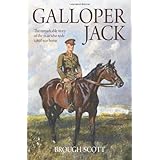
Brough Scott is the grandson of Brigadier Jack Seely, who commanded the Canadian Cavalry Brigade through most of World War I. Scott wrote "Galloper Jack", about his grandfather.
Dr Kenyon is a historian and notable author of "Horsemen in No Man's Land", a rexamination of the effectiveness of cavalry in the Great War.
I commend both books to anyone interested in the Canadian cavalry and the British cavalry in general.
"War Horse: the Real Story" was a sanitized version of the story of Warrior, Seely's charger during the conflict and after. Obviously meant for an English audience, it only mentioned in passing that Seely's main (but not only) claim to fame was his leadership of the Canadian Cavalry Brigade.
Here are some earlier thoughts about the movie "War Horse", Spielberg's 2011 production.
Monday, November 17, 2014
Mary's Wedding, and the Battle of Moreuil Wood
| A lone "Terror" amongst "Soldiers" |
There were many moist eyes, attested to by the number of tissues handed out by staff as the audience left the theatre. A well done to the backstage crew and the actors, Harrison MacDonald and Julia Siedlanowska, who shone.
I was honoured to have a very small part in prepping the actors as a result of my novel Soldier of the Horse, which had at its climax the battle referenced in "Mary's Wedding"--the Battle of Moreuil Wood, March 30th, 1918. Not to mention a character in common, Gordon Muriel Flowerdew, VC, who led the charge, with real-life "Soldier" Tom Mackay at his elbow.
At a table in the foyer, I answered questions about the battle. More than one person asked if "Flowers" was a real person. He was, of course, and I take my hat off to Massicotte, Pensinsula Productions, and the rest of the gang who helped keep our history alive.
Monday, November 10, 2014
"Mary's Wedding" Opens Tomorrow
Here are the actors in a scene from "Mary's Wedding", the heart-rending play by Stephen Massicotte.
The production runs from November 11th through the 15th. The presentation on Remembrance Day is sold out. Any veterans lucky enough to have tickets to the Remembrance Day performance get free admission, with the public asked for a donation which will go to Honour House.
Tickets for subsequent performances can be obtained online at www.peninsulaproductions.org.
I'm honoured to have been asked to advise on the historical aspects of the production. Attendees can if they wish pick up a copy of Soldier of the Horse, my novel set in WW I's Canadian Cavalry Brigade, after the show. Soldier shares a very important character with "Mary's Wedding".
In other literary news, I understand an upcoming edition of the Surrey Leader will feature a review of Terror on the Alert, my submarine thriller. Very exciting.
Tuesday, September 23, 2014
Cavalry vs Cavalry
Cavalry Technology!
Thanks to Bob Mugford, editor of the Royal United Services Institute (RUSI-Vancouver) Newsletter for the following item. My Random House Dictionary notes a cuirassier is "a cavalry soldier wearing a cuirasse"; a cuirasse being armour consisting of a breastplate and backplate. So far as I know the German cavalry encountered by the British in the early days of WW I weren't encumbered by the cuirasse.
When the British cavalry had to face cuirassiers
for the first time, wearing their body armour, much discussion was had as to
how to defeat them. The answers for the
heavy cavalry with a straight sword and light cavalry with a curved one was
necessarily different.
The light cavalry answer was to slice at the arms, preferably the bridle holding arm, causing the cuirassier to lose control of his horse.
The heavy cavalry opted for a straight jab at the throat (this might miss and strike the face - Kennedy records stabbing one through the mouth). This would certainly do the trick. But if in too close to stab at him it was recommended that you punched the cuirassier in the face with the hand guard, this would cause the cuirassier to lose balance and topple from the horse. A cuirassier on the ground was useless, finding it impossible to remount in their breastplates.
Finally both recommended that if the cuirassier had passed then a back swipe at the back of the neck would decapitate the cuirassier. Many claim that numbers of cuirassiers fell to this stroke.
The light cavalry answer was to slice at the arms, preferably the bridle holding arm, causing the cuirassier to lose control of his horse.
The heavy cavalry opted for a straight jab at the throat (this might miss and strike the face - Kennedy records stabbing one through the mouth). This would certainly do the trick. But if in too close to stab at him it was recommended that you punched the cuirassier in the face with the hand guard, this would cause the cuirassier to lose balance and topple from the horse. A cuirassier on the ground was useless, finding it impossible to remount in their breastplates.
Finally both recommended that if the cuirassier had passed then a back swipe at the back of the neck would decapitate the cuirassier. Many claim that numbers of cuirassiers fell to this stroke.
Thursday, August 28, 2014
Upcoming Events--Cavalry and Submarines
I'm looking forward to speaking to the Langley Heritage Society on September 23rd, 7 pm, at the Milner Chapel. I'll be talking about the Canadian Cavalry Brigade in the Great War, and explain the process that went into my novel "Soldier of the Horse". And that will be just a week before my submarine thriller, "Terror on the Alert", appears in book stores.I'll be in Ottawa the first week of October, attending the Naval Association of Canada's AGM and Conference, the topic of which is "Submarines: Past, Present, and Future".
Next up in October are two appearances in branches of the Vancouver Public Library to talk about submarines and "Terror on the Alert". On the 7th I'll be at the Kerrisdale branch, and on the 30th, at the Britannia branch.
I'm very excited about the chance to speak to people interested in our Canadian heritage.
Monday, August 4, 2014
"Soldier of the Horse" at the VPL
As predicted, last Wednesday the 30th of July was a busy one. I was interviewed briefly on The Early Edition on CBC Radio, then attended an afternoon showing of "War Horse", Spielberg's movie adaptation of Michael Morpurgo's novel.
That evening, I spoke in the Alice MacKay room of the main branch of the Vancouver Public Library. My topic was Soldier of the Horse, the first public presentation regarding my first novel in some time.
The event was a joint effort by the VPL and the Vancouver branch of RUSI, the Royal United Services Institute. At the left in the photo is RUSI president Cameron Cathcart, a former CBC reporter and great advocate of the need to celebrate our military history and remember the sacrifices of so many.
More RUSI events to mark the 100th anniversary of the outbreak of the Great War will be featured at the Vancouver Public Library.
That evening, I spoke in the Alice MacKay room of the main branch of the Vancouver Public Library. My topic was Soldier of the Horse, the first public presentation regarding my first novel in some time.
The event was a joint effort by the VPL and the Vancouver branch of RUSI, the Royal United Services Institute. At the left in the photo is RUSI president Cameron Cathcart, a former CBC reporter and great advocate of the need to celebrate our military history and remember the sacrifices of so many.
More RUSI events to mark the 100th anniversary of the outbreak of the Great War will be featured at the Vancouver Public Library.
Tuesday, July 29, 2014
Navy Woes and Cavalry Stories
Tomorrow, July 30th, will be a busy day for Soldier of the Horse.
The good people at The Early Edition on CBC Vancouver have invited me to attend for an interview at 7:50 am tomorrow (0750 for present and former RCN readers, 0750 hours for all you army types out there). The occasion is a Vancouver Public Library/Royal United Services Institute initiative: the showing of the movie "War Horse" at 1:30 pm, same day, at the VPL. Later, at 7:00 pm I'll be speaking in the library about my father's time in the Canadian cavalry in the Great War and Soldier of the Horse.
My talk is the first of four scheduled in the VPL to mark the 100th anniversary of the start of World War One.
In the meantime, across the Pacific, the huge naval, land, and air exercise RIMPAC 2014 continues. But the Royal Canadian Navy finds itself short of seagoing ships. Our submarine Victoria is there, along with frigate HMCS Calgary and minesweeper HMCS Nanaimo (she is in California waters, as opposed to the central Pacific/Hawaii).
Missing in action are HMCShips Algonquin (destroyer, rusting out), Protecteur (fire damaged supply ship), and minesweeper Whitehorse (bad behavior by members of the crew). You have to sympathize with navy personnel who in typical Canadian fashion carry on with less. Less money, less fuel, lesser numbers of ships. One has to wonder who will protect Canadian interests at sea in case of need.
The good people at The Early Edition on CBC Vancouver have invited me to attend for an interview at 7:50 am tomorrow (0750 for present and former RCN readers, 0750 hours for all you army types out there). The occasion is a Vancouver Public Library/Royal United Services Institute initiative: the showing of the movie "War Horse" at 1:30 pm, same day, at the VPL. Later, at 7:00 pm I'll be speaking in the library about my father's time in the Canadian cavalry in the Great War and Soldier of the Horse.
My talk is the first of four scheduled in the VPL to mark the 100th anniversary of the start of World War One.
In the meantime, across the Pacific, the huge naval, land, and air exercise RIMPAC 2014 continues. But the Royal Canadian Navy finds itself short of seagoing ships. Our submarine Victoria is there, along with frigate HMCS Calgary and minesweeper HMCS Nanaimo (she is in California waters, as opposed to the central Pacific/Hawaii).
Missing in action are HMCShips Algonquin (destroyer, rusting out), Protecteur (fire damaged supply ship), and minesweeper Whitehorse (bad behavior by members of the crew). You have to sympathize with navy personnel who in typical Canadian fashion carry on with less. Less money, less fuel, lesser numbers of ships. One has to wonder who will protect Canadian interests at sea in case of need.
Friday, December 20, 2013
Future Posts--Saddles and Periscopes
2013 is drawing to a close, it’s time to reflect on all the positive feedback I’ve received for my first novel, Soldier of the Horse, and my blog. Soldier made a Bestseller list, and a gold medal for wartime/historical fiction from the Independent Publisher organization in the United States. Sales have been very rewarding, but just as satisfying have been the many comments about the book including of course some excellent reviews.
Another activity I’ve been working on is the content of this blog. Followers and casual readers of my blog will know I’ve been concentrating on entries about submarines in general and Cold War and Canadian submarines in particular. I am going to do a quick pivot, as they say in military and naval circles, and spend some time touching bases once again with the Canadian cavalry in the last few months and weeks of the Great War.
Having said that, though, I’ll intersperse some submarine lore and developments. I’ll be looking for feedback, so don’t hold back!
And, speaking of submarines, my manuscript about a Canadian submarine during the Cuban Missile Crisis is now on the publisher's desk. I'm very excited about that.
Thursday, September 12, 2013
"Soldier of the Horse" Gallops On
I've been expending a lot of time recently on my upcoming but as yet unnamed submarine thriller (working title "Sailor Down"), but there is a temporary hiatus as I await the first round of edits.
So in the meantime it's a chance to check up on how my prize-winning first novel, "Soldier of the Horse", is doing. Recent highlights:
* Recent acquisition of audiobook rights by Amazon's audible.com.
* "Bestseller" following an appearance at the marvellous Winnipeg bookstore McNally Robinson
* A very successful day of sales and signing books at the Country Pedlar, Interlakes, in the Cariboo
* An email from a Bolivian jungle animal refuge park volunteer saying how much she was enjoying "Soldier of the Horse"
* A very enthusiastic comment from a retired Canadian Army colonel
* A scheduled return engagement to speak about the book and horses in World War I at the Surrey Museum on November 11, Remembrance Day. For details click here.
So in the meantime it's a chance to check up on how my prize-winning first novel, "Soldier of the Horse", is doing. Recent highlights:
* Recent acquisition of audiobook rights by Amazon's audible.com.
* "Bestseller" following an appearance at the marvellous Winnipeg bookstore McNally Robinson
* A very successful day of sales and signing books at the Country Pedlar, Interlakes, in the Cariboo
* An email from a Bolivian jungle animal refuge park volunteer saying how much she was enjoying "Soldier of the Horse"
* A very enthusiastic comment from a retired Canadian Army colonel
* A scheduled return engagement to speak about the book and horses in World War I at the Surrey Museum on November 11, Remembrance Day. For details click here.
Sunday, February 10, 2013
The Canadian Cavalry Brigade’s Last Mounted Battle
The Canadian Cavalry Brigade was
in the thick of the Last Hundred Days, the final days of World War I. The
Germans had expended their energies trying to strike a final victory, and had
not managed it.
| Soldier, LSH, by Ron Volstad |
On October 9th, 1918,
there was barely a month of war left, but at the 2nd Battle of Le
Cateau, there was fighting enough for both sides. The battle involved British,
French, and to a lesser extent American forces on one side, the Germans on the
other.
Le Cateau was to be the last time
the Royal Canadian Dragoons, Lord Strathcona’s Horse (Royal Canadians), and
Fort Garry Horse would take part in mounted attacks. As was the case for many cavalry
actions, they were spectacularly successful—but incurred terrible losses.
Watch
for more on the 2nd Battle of Le Cateau.
Thursday, January 3, 2013
"Horsemen in No Man's Land"
Here is the cover image of "Horsemen in No Man's Land", by David Kenyon.
Subtitled "British Cavalry & Trench Warfare 1914-1918", Kenyon's book is a must-read for people even casually interested in the British cavalry--which, in the Great War, included the Canadian Cavalry Brigade.
Indeed, the Canadians in the Canadian Cavalry Brigade were a small but crucial element in the Allies' eventual triumph in 1918.
Sunday, November 11, 2012
Remembrance Day 2012 (Part II)
The weather for today’s
Remembrance Day ceremony in Cloverdale worked out very well, but it was a
close-run operation. It was cold enough that we felt for the vets in
wheelchairs, wearing blazers, medals, trousers and berets. We should bring
blankets for them; one who was close to us had to leave part way through.
Photo: the crowded Cenotaph Square, Cloverdale
Following the ceremony, I spoke
to a very enthusiastic audience in the Surrey Museum about horses in the Great War, and the Canadian
Cavalry Brigade.
Many thanks to Boaz Joseph, photographer and
reporter for the Surrey Leader, whose advance story contributed much to the
day. Here is the site; a very good article: http://www.surreyleader.com/community/178216371.html
Thursday, October 11, 2012
S. H. Williams, author: Stand to your Horses Part II
Sam Williams earned the nickname “Lucky
Luke” while serving with Lord Strathcona’s Horse (Royal Canadians) in the Great
War. The sobriquet was gained because he was at one time at least the only LSH
officer not wounded or killed. He was awarded the Military Cross; his survival
was not because he ducked a fight.
Sam Williams took part in, and
had leadership roles in, raids into enemy trenches and numerous runins with the enemy. He also led troopers on foot
into the teeth of German machine guns at Rifle Wood, a crucial battle that followed
just days after the Battle of Moreuil Wood. Like many a cavalryman he lost
horses to enemy action.
Quite apart from his actions against the enemy,
however, he pieced together a detailed and lucid account of his war while
serving with the Canadian Cavalry Brigade. That account, Stand to your Horses, is a bible for those researching the Brigade’s
activities in the World War I. The book is available through the LSH(RC)
kitshop at their Edmonton barracks. It has served as an original document for numerous researchers, including myself.
Monday, September 17, 2012
1917--Canadians in the Indian Army
9th Hodson’s Horse; 20th
Deccan Horse; and the 3rd (Ambala) Cavalry Brigade. Magical names,
names to conjure with, straight out of the Aghan Wars of the 19th
century and Kipling’s “Great Game”, redolent of the far-flung British Empire on
which the sun never set. Those were some of the units of the 2nd
Indian Cavalry Division, which sailed for France from Bombay in October, 1914—the
same month the Canadian cavalry regiments, coming from the other direction, arrived
in England .
![]() |
| 2nd Indian Cavalry during the Battle of the Somme |
Thus it was that in March 1917 the Order of Battle of the 2nd Indian Cavalry Division (although renamed) included 9th Hodson’s Horse, 20th Deccan Horse, and...the Dragoons, the Strathcona’s, the Fort Garrys, the Royal Canadian Horse Artillery Brigade, and the CCB Machine Gun Squadron.
Modern Canadians are aware that Canadian forces are integrated with American and NATO troops at times; but who would guess the Canadian Cavalry Brigade was part of an Indian Division almost a hundred years ago?
Sunday, September 9, 2012
The Battle of Amiens
| Gordon Flowerdew, VC. courtesy Barney Flowerdew |
In his novel “Kanata”, historian
Don Gillmore’s character Michael Mountain Horse is in France with the Canadian
army. In 1918 he is transferred to the Royal Canadian Dragoons because he can
ride. He listens to two of his comrades who are arguing over Flowerdew’s
charge earlier that year. Victory or defeat? The Canadians were annihilated, but the Germans
retreated.
On August 8th, 1918, Mountain Horse plunges into battle along with the Dragoons, the Strathconas,
and the Fort Garrys. They are part of a cast of tens of thousands: French, Brits, Aussies, and Canadians,
all buttressed by tanks, taking part in the Battle of Amiens. They were within five miles of Moreuil where Gordon Flowerdew and many of his men had galloped to their
deaths just four month before. At Amiens many of the cavalrymen perished in yet another mounted charge.
A bleak victory, but an important one, to be sure. As German General Ludendorff said later, it was the "black day of the German Army in the history of this war".
Subscribe to:
Posts (Atom)