Showing posts with label Canadian submarines. Show all posts
Friday, October 9, 2015
A Second Location
It's very gratifying to see my "Forces With History" blog continues to attract attention, even though I'm now blogging on a regular basis on a new site, where my blog is integrated with my website.
A direct link to my new blog will take you straight there.
I'm continuing to publish a newsletter, also called "Forces With History", that comes out every three weeks or so. It deals with defence topics, the navy, submarines, and anything in the general area that catches my eye. To receive it, just send me an email at bob.mackay@hotmail.com, or telephone 778-388-1009.
Monday, March 9, 2015
A Tour of a Cold War O-Boat (6th of 6)
Here is a shot taken in 2012. The former HMCS Ojibwa is about to give birth to the Elgin Military Museum's submarine exhibit at Port Burwell on the north shore of Lake Erie--by making her way to her final (I can't help myself) berth.
(photo credit Phyllis Hinz)
And here's how Ojibwa looked in 2013, when the able and welcoming staff in Port Burwell were working their magic, preparing the cold warrior for her public debut.
Port Burwell and Ojibwa are well worth a visit, for submariners and civilians alike.
And for a "gripping adventure in the grand trradition of sea sagas" (Ian Weir), beg, borrow or steal a copy of "Terror on the Alert".
Monday, March 2, 2015
A Tour of a Cold War O-Boat (5)
Continuing our tour aft on board HMCS Ojibwa, we have passed through the accommodation space with its assorted messes and berths. The photo to the left is part of the starboard side of the control room, featuring the chart table, a prominent red light bulb, various communication outlets, a clock, etc.
And to the right is an image of part of the port side of the control room under red lighting conditions.
The red lighting is switched on at dusk and off at dawn, even when running at great depth, in case it is necessary to surface in a hurry. Also, if at periscope depth, it allows the periscope watchkeeper's eyes to be adjusted for night vision.
Not shown in either photo are the periscopes, which are on the centre-line of the boat, with the attack (monocular) periscope forward of the search periscope, which is binocular.
And to the right is an image of part of the port side of the control room under red lighting conditions.
The red lighting is switched on at dusk and off at dawn, even when running at great depth, in case it is necessary to surface in a hurry. Also, if at periscope depth, it allows the periscope watchkeeper's eyes to be adjusted for night vision.
Not shown in either photo are the periscopes, which are on the centre-line of the boat, with the attack (monocular) periscope forward of the search periscope, which is binocular.
Saturday, January 31, 2015
Submarine Lecture in Ladner
This was the scene at the Ladner Yacht Club the evening of Friday January 30th. The Fraser Power and Sail Squadron held a graduation ceremony for recent boating course students. I was honoured to be asked to speak about "Submarines, Canada, and Terror on the Alert". Above, I'm being introduced by instructor Bob Juulsen.
It was a real pleasure to talk submarines to an appreciative and enthusiastic audience.
Many thanks to the Squadron for having me as a guest.
Photos courtesy Kathleen and Paul Vanderwood.
It was a real pleasure to talk submarines to an appreciative and enthusiastic audience.
Many thanks to the Squadron for having me as a guest.
Photos courtesy Kathleen and Paul Vanderwood.
Monday, January 26, 2015
A Tour of a Cold War O-Boat (4)
We are continuing aft on board HMCS Ojibwa, as she rests in her permanent berth ashore in Port Burwell, Ontario. We have passed through the watertight door into the accommodation spaces. On the left is a shot of a couple of bunks and some lockers. My memory fails me as to whether this is in the crew's quarters, or the chiefs and petty officers mess. Can someone help with a comment?
And here, on the right, we have the rather palatial commanding officer's cabin as seen from the passageway that threads its way the length of the boat. The lucky captain has hardwood to sleep on as opposed to a canvas sling. Not sure that would make it more comfortable.
Other features include a miniscule desk, a couple of drawers, and gauges and instruments so the captain can monitor the boat's progress. The cabin is very handy to the control room, so he can be there within seconds in case of an emergency or other development.
And here, on the right, we have the rather palatial commanding officer's cabin as seen from the passageway that threads its way the length of the boat. The lucky captain has hardwood to sleep on as opposed to a canvas sling. Not sure that would make it more comfortable.
Other features include a miniscule desk, a couple of drawers, and gauges and instruments so the captain can monitor the boat's progress. The cabin is very handy to the control room, so he can be there within seconds in case of an emergency or other development.
Wednesday, January 14, 2015
A Tour of a Cold War O-Boat (3)
Following up on our tour parts (1) and (2), we've now climbed the stairs and entered the forward torpedo room in HMCS Ojibwa. We're looking forward in the cavernous space. The spot of bright light near the centre of the photo is the top of the new access door through which we've entered. The size of the space can be gauged by the figure of retired Admiral Dan McNeil, who can just be made out in the lower right corner. The rear doors of the three port torpedo tubes are between him and the access door.
Also visible on the left are parts of the torpedo racks which would hold spare torpedoes to be loaded using hydraulic rams as required. Before loading, the tube rear doors would have to be opened--once it was confirmed that the bow caps were shut and no water was in the tubes. A very important step.
The myriad of pipes, valves, and controls allow firing of a torpedo and the subsequent draining down of the now flooded tube so it can be reloaded.
It was not unknown for a boat to carry beer in an empty tube.
Thursday, January 8, 2015
A Tour of a Cold War O-Boat (2)
Number 1 in this series of posts showed an unusual view of HMCS Ojibwa, the gorgeous museum piece in Port Burwell, Ontario.
(If pressed, I'll admit that "gorgeous" when referring to a submarine is all in the eyes of the beholder.)
At left is the Ojibwa as she appeared when the Cooking Ladies and I approached from the west and crossed the bridge into Port Burwell in 2013.
The boat was not then open to the public, but nearly so.
This shot of the port side of the boat shows the steps installed to allow tourists to access the newly-cut doorway into the forward torpedo room.
Looking like an earflap at the top of the stairs is the door, and above that is the port forward hydroplane. The hydroplanes, working in concert while controlled by the helmsman, determined the boat's depth and angle of dive.
At left is the Ojibwa as she appeared when the Cooking Ladies and I approached from the west and crossed the bridge into Port Burwell in 2013.
The boat was not then open to the public, but nearly so.
This shot of the port side of the boat shows the steps installed to allow tourists to access the newly-cut doorway into the forward torpedo room.
Looking like an earflap at the top of the stairs is the door, and above that is the port forward hydroplane. The hydroplanes, working in concert while controlled by the helmsman, determined the boat's depth and angle of dive.
Monday, January 5, 2015
A Tour of a Cold War O-Boat (1)
Here is an unusual view of an Oberon-class submarine. To be more precise, the image is of the former HMCS Ojibwa, taken at her new home in Port Burwell, on the shore of Lake Erie, a couple of hours' drive east of Windsor.
Ojibwa is a major attraction in a rural area of Ontario. If it seems like an odd place for a submarine, you might want to talk to retired admiral Dan McNeil, who spearheaded the effort to land the Cold War boat above the Lake Erie shoreline.
This is Dan, pictured on board Ojibwa just before she opened to the public in 2013. Not exactly Dan's working uniform when he was in the Royal Canadian Navy, but more more typical of the hands-on work asked of his crew--and himself--as they laboured to restore the boat.
Watch for an ongoing series of posts about the Ojibwa and the Port Burwell project. And go see Dan--and Ojibwa--if you're in the area!
Ojibwa is a major attraction in a rural area of Ontario. If it seems like an odd place for a submarine, you might want to talk to retired admiral Dan McNeil, who spearheaded the effort to land the Cold War boat above the Lake Erie shoreline.
This is Dan, pictured on board Ojibwa just before she opened to the public in 2013. Not exactly Dan's working uniform when he was in the Royal Canadian Navy, but more more typical of the hands-on work asked of his crew--and himself--as they laboured to restore the boat.
Watch for an ongoing series of posts about the Ojibwa and the Port Burwell project. And go see Dan--and Ojibwa--if you're in the area!
Friday, December 19, 2014
US-Cuba Easing the Strain
It's taken over 50 years, but President Obama's move toward normalizing affairs with Cuba has interesting sidebars. Even though Canadian naval and air forces were shoulder to shoulder with the Americans during the Cuban Missile Crisis in 1962, it was Prime Minister Trudeau of Canada who later remained in close touch with Fidel Castro.
And now Conservative PM Harper has facilitated meetings between the American and Cuban diplomats.
Meanwhile, ex-pat Cubans in Florida are at loggerheads over the issue.
Most Canadians, Americans, and Cubans were not alive in 1962. But for a look at those terrifying days in a Canadian submarine, check out "Terror on the Alert".
And now Conservative PM Harper has facilitated meetings between the American and Cuban diplomats.
Meanwhile, ex-pat Cubans in Florida are at loggerheads over the issue.
Most Canadians, Americans, and Cubans were not alive in 1962. But for a look at those terrifying days in a Canadian submarine, check out "Terror on the Alert".
Friday, October 24, 2014
Naval Association of Canada Conference 2014
Here is a snapshot taken at the Meet 'n' Greet at the Lord Elgin Hotel, Ottawa, the first week of October. The occasion was the start of the Naval Association of Canada's AGM and conference, the theme of which was Canada's Submarines: Past, Present and Future.
The two gentlemen pictured are fellows I've known for a long time.
Brooke Campbell, on the left, was a student at UBC and officer-cadet in the University Naval Training Division (UNTD) at HMCS Discovery. I got to know him well, as I was also at Disovery as a regular force RCN cadet.
Brooke went on to a very successful career in banking and investing, and is currently submitting material to the Canadian government about tax treatment of RRSP's.
On the right is Keith Nesbit, Captain RCN (Ret'd). I met Keith when we were both very junior submariners. That's where I stayed, as far as the submarine world is concerned (not counting recent literary efforts). Keith, however, went on to an illustrious career as a submarine CO and, since retirement from the RCN, as a professional keyboardist.
Keith's music can be accessed by contacting him directly: keith@nesbit.net.
And my recent submarine thriller, "Terror on the Alert", is in better bookstores everywhere, Amazon, and from my publisher.
The two gentlemen pictured are fellows I've known for a long time.
Brooke Campbell, on the left, was a student at UBC and officer-cadet in the University Naval Training Division (UNTD) at HMCS Discovery. I got to know him well, as I was also at Disovery as a regular force RCN cadet.
Brooke went on to a very successful career in banking and investing, and is currently submitting material to the Canadian government about tax treatment of RRSP's.
On the right is Keith Nesbit, Captain RCN (Ret'd). I met Keith when we were both very junior submariners. That's where I stayed, as far as the submarine world is concerned (not counting recent literary efforts). Keith, however, went on to an illustrious career as a submarine CO and, since retirement from the RCN, as a professional keyboardist.
Keith's music can be accessed by contacting him directly: keith@nesbit.net.
And my recent submarine thriller, "Terror on the Alert", is in better bookstores everywhere, Amazon, and from my publisher.
Wednesday, August 13, 2014
Submarine Week in Victoria (3)
Here are a couple more photos taken last week.
This one shows, on the left, George Cruickshank, owner of The Museum of the Battle of the Atlantic in Duncan, BC. I seem to have bestowed a halo on George, well-deserved I am sure.
With him is Captain Wilf Lund, RCN (Ret'd), who presented along with Philip Sherwood about Philip's new book.
On the right is Phillip Sherwood. Philip is a publisher of memoirs and family histories, and this time he turned his talents to "It's Not the Ships...My War Years." The book tells the story of his father, Frederick H. Sherwood, a Canadian submarine captain in World War II. I will comment more about the book in a future blog or newsletter.
Speaking of newsletters, if you would like to receive a more or less weekly update on submarines, Canadian cavalry, and related topics, just click on the "Subscribe" button above and to the right.
This one shows, on the left, George Cruickshank, owner of The Museum of the Battle of the Atlantic in Duncan, BC. I seem to have bestowed a halo on George, well-deserved I am sure.
With him is Captain Wilf Lund, RCN (Ret'd), who presented along with Philip Sherwood about Philip's new book.
On the right is Phillip Sherwood. Philip is a publisher of memoirs and family histories, and this time he turned his talents to "It's Not the Ships...My War Years." The book tells the story of his father, Frederick H. Sherwood, a Canadian submarine captain in World War II. I will comment more about the book in a future blog or newsletter.
Speaking of newsletters, if you would like to receive a more or less weekly update on submarines, Canadian cavalry, and related topics, just click on the "Subscribe" button above and to the right.
Monday, August 11, 2014
Submarine Week in Victoria (2)
From Tuesday to Friday last week, August 5th to 8th, submariners from across Canada met in Victoria and environs to celebrate 100 years of Canadian submarines. One of the highlights was the banquet in the wardroom, just outside the gates of the Dockyard. It was a glorious summer evening, with inspiring views from the deck outside.
Here are a few of the attendees, from left to right: author and photographer Julie H. Ferguson, myself, Diane Davie, Nancy Houle, and Ted Davie, submariner. Ted had much to do with the acquisition of the Victoria class (formerly Upholders) from the RN. Thanks to Chief Petty Officer Jens Simonsen of HMCS Chicoutimi for taking the photo.
Thursday, August 7, 2014
Submarine Week in Victoria
Submarine Week, celebrating the 100 years of Canadian submarines, continues with a banquet tonight, with the guest of honour the Lieutenant-governor of British Columbia. Tomorrow will see the opening of a redesigned submarine display and a wrap-up barbeque.
.JPG)
The Submarine Association of Canada (West) and their partners have done a bang-up job, even extending to the production of commemorative polo shirts. BZ to all involved.
Wednesday, July 23, 2014
"Forces With History"--Glory Days
Amazing--the next few days are in the 'never a dull moment' category. Consider that this blog and my newsletter concern themselves with pretty disparate subjects: cavalry, submarines, and other things that catch my eye
On July 30th the Vancouver Public Library will screen the movie "War Horse" at 1:30 pm, downstairs in the Alice MacKay room. I'll be there, taking another look at Steven Spielberg's version of Michael Morpurgo's children's story. My recollection is that the scenes of a cavalry charge are shockingly well done. The photo at left is "A Canadian Trooper and His Horse" by Sir Alfred Munnings.
That same evening, I'll be speaking to people interested in hearing about a real-life cavalry trooper and his experiences. My father was the inspiration for Soldier of the Horse, and I look forward to presenting some images that help understand what cavalrymen and their mounts were up to in 1914-18.
Submarines:
The first week of August is Submarine Week in Victoria: the 100th anniversary, to the day, of the birth of the Canadian submarine service. I'll be there, taking in the sights and sounds at the commemorative luncheon at the Union Club (where the deal for our first two boats was cobbled together), a banquet, and a historical presentation at the Royal BC Museum by fellow author Julie H. Ferguson. Photo at right is HMCS Okanagan off Gosport in the UK in 1968
As a personal highlight, my submarine thriller "Terror on the Alert" will be available at the submarine events, although official launch is September 30th.
Details of Submarine week can be accessed at the Submarine Association of Canada (West) website.
What more could a blogger about cavalry and submarines ask for?
Monday, July 14, 2014
Diesel-electrics Doing the Job
Diesel-electric submarines have a long pedigree. In fact, Canada's first diesel-electrics were CC1 and CC2 (shown at left), purchased almost exactly 100 years ago to defend the west coast. And our current boats, HMCS Victoria, Chicoutimi, Corner Brook and Windsor are diesel-electrics. Needless to say, much has changed.
The world's major navies, and some of the less major ones, now have moved on to nuclear boats. The USN and Royal Navies no longer operate any diesels. But that doesn't mean diesel-electrics are outmoded or useless. At times, and in particular during the Cold War, they performed yeoman service. And no navy wants to ever send unprotected surface ships into waters where a hostile diesel-electric could be lurking. As Canada's ongoing use of them indicates, they are effective as deterrents, extensions of sovereignty, and intelligence-gatherers.
For an appreciation of the role of diesel-electrics in the Cold War and elsewhere, Iain Ballantyne, author of Hunter Killers, has written a very informative online article.
Monday, May 26, 2014
Author Interview: Julie H. Ferguson (Part 2 of 2)
This is the second half of my interview of author Julie H. Ferguson:
How much time do you spend writing as opposed to marketing?
At
the moment, 20% writing and 80% promotion. But that is the way it goes.
Usually
I write more than 50% of the time, and much of that is now articles not books.
What were your personal
connections to submarines and the navy generally?
In
1979, as a naval reserve officer, I was taken on a tour of HMCS Okanagan as part of my orientation. I fell in love
with submarines and Okanagan’s CO at
first sight. Soon after we were married I asked him over a bottle of Chianti
what books had been written about the Canadian submarine service and he said,
“None as far as I know.”
With
the bravado of wine, I said, “Well, I shall write one!”
If
I’d known it would take eleven years from concept to launch, I would never have
had the guts to start it.
What other books that you have
written are you particularly pleased with?
All of them — two on submarine history that
we’ve already discussed; one about bishops of BC, Sing a New Song:
Portraits of Canada’s Crusading Bishops; and
one about the fur trade, James Douglas: Father of British Columbia, which is a young adult biography that reads
as an adventure story. All are Dundurn books. The last one was researched,
written, and revised in under four months, which I didn’t think I could achieve
and was thrilled it came out as well as it did.
My
bestselling book is Book
Magic: Turning Writers into Published Authors, one of my six self-published books for Canadian writers.
I
have also self-published eight photo portfolios, but they are an ego thing!!
All
this makes me a successful hybrid author, both self- and traditionally
published; the blend improves my revenue.
What is your routine for
writing—a particular place, or time of day?
Deadlines
drive my writing, always have. I write like a fiend until a project is finished
and then take a vacation! Not like many colleagues who prefer a writing routine
of a set time and place.
I
like peace and quiet to write with no distractions so I can get into “the zone”
quickly and stay there. I do listen to baroque music as I write and have a
small fountain in my study. When I’m stuck, I go for a walk and think it
through. Always works for me, and has recently been proven by research at
Stanford University.
If you were to give one piece of
advice to new or emerging writers, what would it be?
Engage
in your writing community. Take advice from published authors about good
critique groups, workshops and conferences to attend, and use a
good professional freelance editor who will teach you bucket-loads about craft.
Do you have a project you are
working on that you can tell us about?
I
will be away on travel writing assignments until the beginning of October, so
I’m researching those destinations at present. Additionally, I am writing and
illustrating some presentations for the submarine centenary. No more books on
the horizon, but I do have a mid-grade novel series underway with the first
book in the can — I have yet to pitch it.
Julie Ferguson blogs at http://beaconlit.blogspot.com and is on Facebook, www.facebook.com/beaconliteraryservices. Her books are available on Amazon.ca.
Part 1 of the interview is in an earlier blog post.
Julie Ferguson blogs at http://beaconlit.blogspot.com and is on Facebook, www.facebook.com/beaconliteraryservices. Her books are available on Amazon.ca.
Part 1 of the interview is in an earlier blog post.
Monday, May 19, 2014
Author Interview: Julie H. Ferguson (Part 1 of 2)
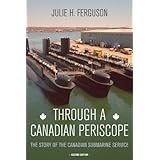
Julie H. Ferguson is an author, travel writer and photographer. She has an abiding interest in Canadian submarines. I recently interviewed her; here is part 1:
Periscope sold two thirds of its print run in the first three months, and was
out of print a couple years later. I attributed this to the book being selected
for Books for Everyone just before
Christmas 1995 — no social network or Internet campaigns in that era, just
personal appearances on national radio and lots of positive reviews in the
print media. I didn’t have a website until late-1996. How times have changed!
Who put on pressure for the
second, updated edition, which just came out in March this year? Was it from
your end, or from your publisher?
It
was a joint endeavour — I’m fortunate to be close to my publisher, Kirk Howard,
of Dundurn and also have had an ongoing relationship with the VP Sales and
Marketing since 1993. Dundurn had published two other books of mine in 2006 and
2009, so I just told them about the submarine centenary over dinner one night.
This is the huge advantage of building a strong and long relationship with your
publisher and staff.
Were you anxious to do an update,
in order to discuss the acquisition of the Victoria-class submarines and recent
developments?
I
was more eager to celebrate the submarine centenary in the only way that I
could contribute. It was more that, than a desire to update Periscope. After all, I had another submarine book, Deeply
Canadian, that detailed the acquisition
of the Victorias after a ten day visit with the RN Upholder Sales Team in the
UK. All I had to do was to discuss the activation, operational and maintenance
processes with the RCN Submarine Force to get the books current. One benefit of
second editions, however, is the ability to correct a few mistakes that became
known after publication and another is the opportunity to restore the old
images and add new ones.
What were the challenges in
putting out the second edition?
None
for Periscope. Also as all rights to Deeply Canadian had reverted back to me, I was free to make
the changes to that book and publish it electronically using Kindle Direct
Publishing, which I know how to do.
How have sales been?
Periscope: Don’t know until I sit down with the team at the end of June, and
really we won’t know the details until after the centennial Submarine Week in
August.
Deeply: I had 300 downloads of the digital second edition over Easter following
a giveaway on Amazon and a huge promotion campaign on social media. I expected
about 50 copies max, so was thrilled. This also caused a spike in Periscope
sales apparently, but I don’t know the
figures.
That
was precisely my intention.
As
an aside, this campaign also directly garnered invitations to do signings, media
interviews, and presentations from the promotion of Deeply. A good result all round.
Julie Ferguson blogs at http://beaconlit.blogspot.com and is on Facebook, www.facebook.com/beaconliteraryservices. Her books are available on Amazon.ca.
Monday, May 5, 2014
Battle of the Atlantic at HMCS Discovery
I was honoured to be the speaker at the Naval Officers Association of British Columbia's annual Battle of the Atlantic dinner held on May 3rd at HMCS Discovery. Discovery is the Canadian navy's reserve division headquarters in Vancouver.
Some sixty-five or so members and guests attended. The attendees enjoyed a fine meal and interesting company, with ship's officers leading the way in impromptu renditions of "Heart of Oak" and "What Shall We do with a Drunken Sailor".
Following the formal parts of the dinner I presented a brief overview of Canadian submarines and submariners, tracing back from the present-day Victorias to CC1 and 2. In the photo above, taken during my talk, it was fortuitous that a new painting of CC1 and CC2 by our very accomplished marine artist, John Horton, was on display. It is visible in the background.
Also present were John Molyneux and his grandson, Philip. John is a long-standing member of the NOA of BC. In the photo they are in front of a painting of HMS Hood during a visit to Vancouver between the wars. John had the distinction of serving in Hood--and the good luck to be drafted off scant weeks before she sailed on her final voyage and her fatal meeting with Germany's Bismarck.
Photos courtesy Mary Horton
Some sixty-five or so members and guests attended. The attendees enjoyed a fine meal and interesting company, with ship's officers leading the way in impromptu renditions of "Heart of Oak" and "What Shall We do with a Drunken Sailor".
Following the formal parts of the dinner I presented a brief overview of Canadian submarines and submariners, tracing back from the present-day Victorias to CC1 and 2. In the photo above, taken during my talk, it was fortuitous that a new painting of CC1 and CC2 by our very accomplished marine artist, John Horton, was on display. It is visible in the background.
Also present were John Molyneux and his grandson, Philip. John is a long-standing member of the NOA of BC. In the photo they are in front of a painting of HMS Hood during a visit to Vancouver between the wars. John had the distinction of serving in Hood--and the good luck to be drafted off scant weeks before she sailed on her final voyage and her fatal meeting with Germany's Bismarck.
Photos courtesy Mary Horton
Tuesday, April 22, 2014
By Guess and By God
In the introductory note to his
account of British submarine actions in World War I, William Guy Carr explained
the title as follows:
““By Guess and By God” was a
phrase coined during the war by navigating officers of British submarines to
describe the manner of their navigating. A surface ship in peace time proceeding
on her way without celestial or other aids to navigation goes “by dead
reckoning.” A submarine in war time, with all artificial aids to navigation
removed, with no chance to take a sight for days on end, harassed by the enemy,
with compasses often acting queerly, went “by guess and by God.” Blind as bats,
we guessed and prayed inwardly that we guessed right: the rest was in the hands
of Providence.”
During my own time in submarines,
fifty years after the events described by Carr, there were many occasions when
I “prayed inwardly.” Needless to say, a predicted landfall or confirming change
in the depth of the ocean below us allowed us to breathe a little easier.
Subscribe to:
Posts (Atom)